

From 8th to 11th September 2025, the Agri-Food Systems and Consortium (ASEC) Project, in collaboration with agricultural stakeholders, conducted a four-day farmer training workshop in Ol Joro Orok Constituency, Nyandarua County. The training brought together more than 130 smallholder farmers from across the constituency with the aim of enhancing their knowledge and adoption of sustainable and profitable farming practices.
The workshop focused on four key themes critical to improving farm productivity and resilience. The first was Diversified Farming, where farmers were guided on integrating crops, livestock, and agroforestry to spread risks, improve household income, and ensure consistent food production. The second theme covered Soil Testing and Fertility Management, with demonstrations showing how soil testing informs proper fertilizer use, boosts productivity, and promotes long-term soil health. The third theme, Value Addition, provided farmers with practical skills in processing and packaging produce such as potatoes, milk, and honey to reduce post-harvest losses and increase profitability. Finally, sessions on Climate-Smart Practices emphasized water harvesting, conservation agriculture, drought-tolerant crops, and integrated pest management as essential strategies for mitigating the effects of climate change.
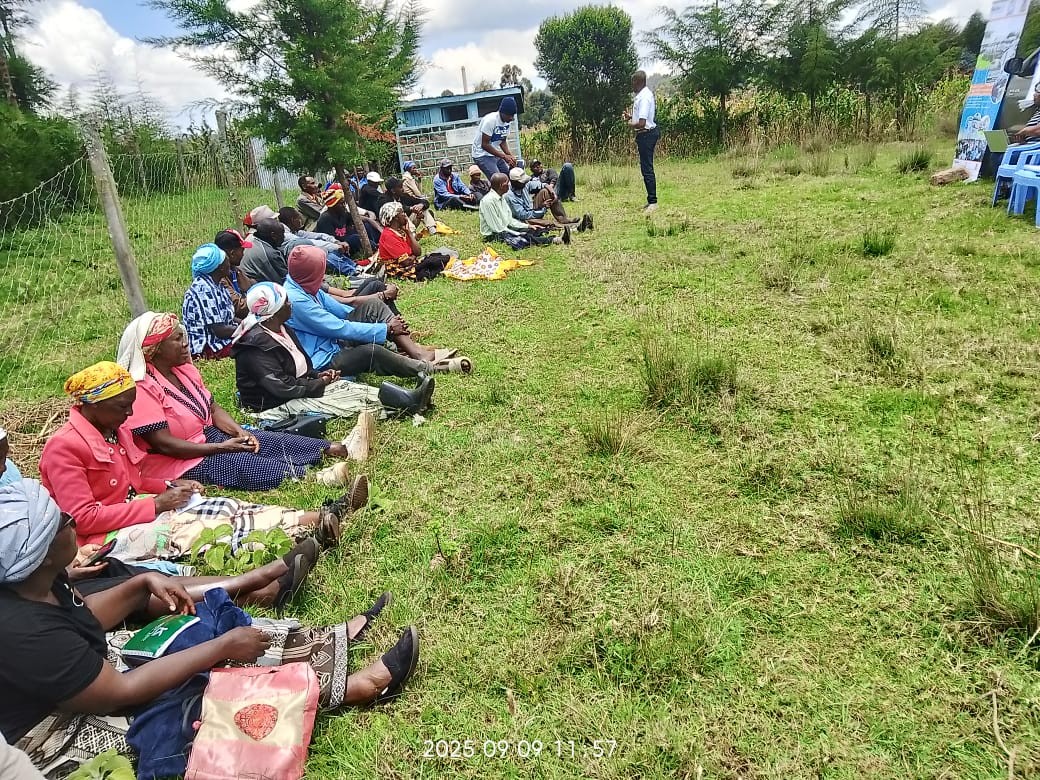
The training achieved several key outcomes. Over 130 farmers were trained, with strong participation from youth and women, reinforcing inclusivity in agricultural development. Practical demonstrations on soil testing, compost preparation, and the use of organic fertilizers strengthened farmer capacity in sustainable soil fertility management. Exposure to value addition opportunities broadened farmers’ awareness of agribusiness potential, particularly within the dairy and potato value chains. In addition, participants expressed strong interest in adopting climate-smart innovations, including crop diversification and small-scale irrigation. The training also strengthened collaboration among farmers, extension officers, and trainers, laying a foundation for continued technical support.
Despite the positive impact, several challenges were observed. Limited access to affordable soil testing services slowed the immediate adoption of recommended practices, while high costs of farm inputs and technologies such as certified seeds and irrigation systems remained major barriers for smallholders. Weak market linkages for value-added products also reduced profitability and discouraged investment in processing. Some farmers required simplified training approaches and repeated demonstrations to address knowledge gaps. Furthermore, climate variability and unpredictable weather continued to threaten productivity, underscoring the need to scale up resilient farming systems.
In conclusion, the training marked a significant milestone in building the capacity of smallholder farmers in Ol Joro Orok Constituency. By equipping them with practical skills in soil management, diversification, value addition, and climate-smart agriculture, the ASEC Project is supporting the transition of farmers from subsistence production to sustainable agribusiness. With continuous follow-up support and stronger market linkages, these interventions will contribute to Nyandarua County’s agricultural transformation and Kenya’s broader food security agenda.