

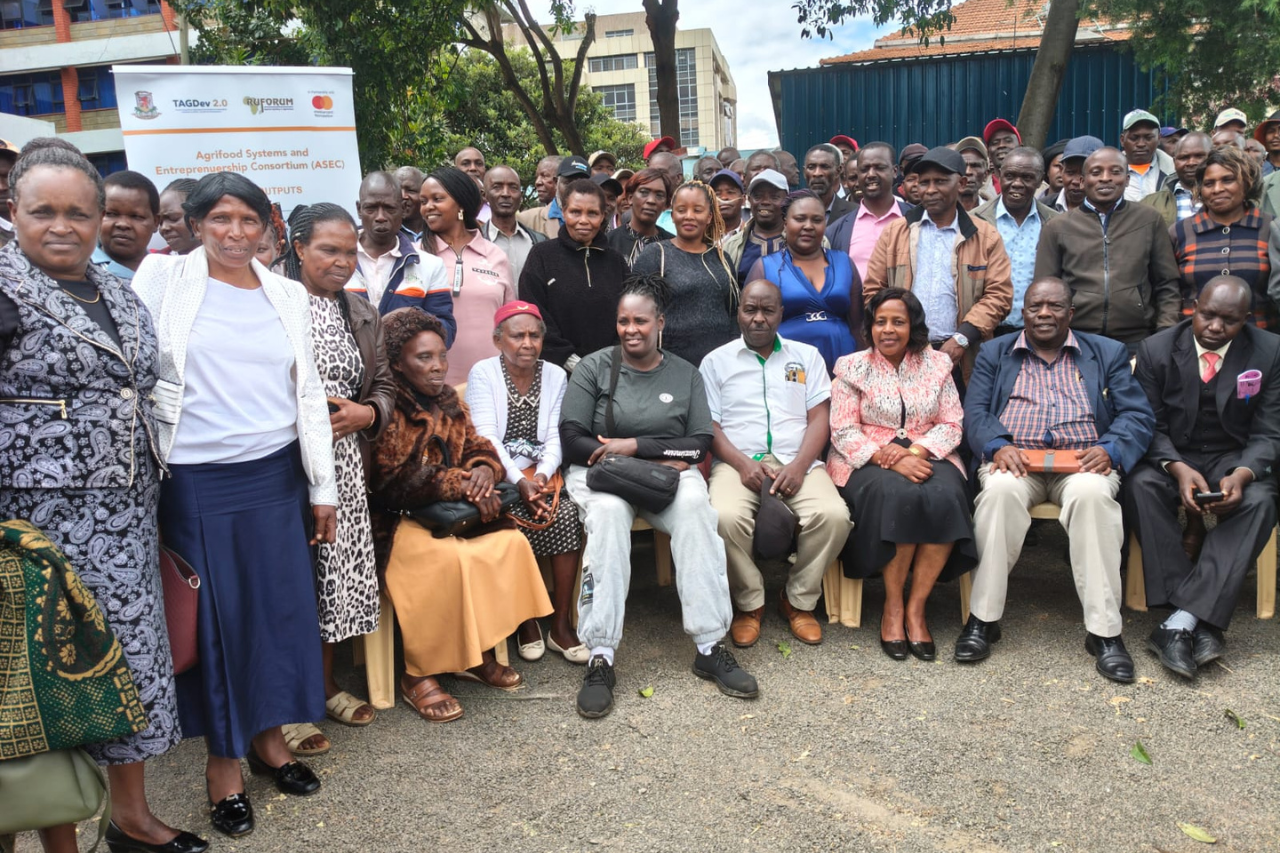
On 18th November 2025, the TAGDev 2.0 Program, Egerton University held a strategic engagement meeting with 144 farmers from Nakuru County cooperatives at the Catholic Diocese of Nakuru conference hall. The session brought together Sub-County Agricultural Officers (SCAOs), cooperative leaders, and members for a collaborative discussion aimed at establishing capacity-building needs, strengthening cooperative structures, enhancing productivity, and promoting climate-smart agricultural practices. The meeting served as a platform to deepen understanding of cooperative operations across Nakuru County while laying the foundation for long-term partnership through which the program and cooperatives can jointly advance inclusive, youth-centered, and innovation-driven agricultural development.
In her opening remarks, TAGDev 2.0 Program Coordinator Prof. Nancy Mungai thanked the farmers for honoring the invitation and making time for the engagement. She reaffirmed Egerton University’s commitment under the Transforming African Universities to Meaningfully Contribute to Africa’s Development (TAGDev) program of working closely with farmers and their cooperatives as key partners in driving agricultural transformation. She reported that TAGDev 2.0 is committed to strengthening cooperatives and empowering young women, young men, and farmers to adopt climate-smart technologies. She highlighted that the program intends to walk closely with cooperatives, particularly those engaged in root and tuber crops and the dairy value chain, in understanding their structures, knowing the farmers they serve, and exploring ways of reinforcing their capacities to deliver better services. She underscored that this was only the beginning of a long collaborative journey grounded in unity, shared commitment, and the belief that strengthened cooperatives can accelerate agricultural transformation.
The farmer cooperatives were taken through the overview and deliverables of the TAGDev program by Virginia Njuguna, TAGDev 2.0 Associate Program Officer and gained a deeper understanding of how it seeks to empower smallholder farmers, expand opportunities for young women and men, and strengthen cooperatives in ways that promote resilience, productivity, and economic inclusion. The discussion further explored how enhanced collaboration with cooperatives can unlock new opportunities for learning, innovation, and value addition across the agricultural landscape.
The SCAOs from Njoro-Mr. Simon Kariuki, Molo-Mr.Julius Mwangi, Kuresoi South-Ms. Joan Koskei, Rongai-Ms. Judith Achieng, and Subukia-Ms Miriam Kinyanjui provided a joint overview of the cooperative ecosystem across their sub-counties. Their presentations highlighted the diversity of cooperatives, the emerging opportunities in various value chains, and the structural challenges that continue to limit cooperatives’ productivity and market competitiveness. They reported gaps such as limited access to certified seeds, inadequate extension services dissemination to farmers, infrastructural constraints affecting market access, and low participation of youth in cooperative leadership and activities. The officers emphasized that while cooperatives hold significant potential for growth, they require strengthened governance, improved management, greater transparency, and more effective engagement of young people to tap into new technologies and evolving market opportunities.
The entrepreneurship session invited cooperatives to reflect on the importance of enterprise-oriented approaches that can enhance job creation, stimulate value addition, and improve overall cooperative performance. Participants examined lessons from thriving cooperative models and discussed how visionary leadership, integrity, and market-driven thinking can position cooperatives as catalysts of rural development.
A comprehensive needs assessment exercise revealed several critical capacity gaps that must be addressed to strengthen cooperative functionality. These included the need for improved financial literacy and record keeping, enhanced leadership and governance skills, stronger business planning and entrepreneurship competencies, and greater exposure to modern farming methods and climate-smart agriculture. These training needs will inform the program’s future interventions in order to build stronger, more resilient cooperatives capable of serving farmers effectively.
In conclusion, the engagement reaffirmed the collective commitment of Egerton University, the County Government of Nakuru, and farmer leaders to strengthen farmer cooperatives as a key driver of agricultural transformation in the county. Through sustained collaboration, capacity building, and the promotion of climate-smart innovations, TAGDev 2.0 aims to expand meaningful employment for young people, enhance economic resilience, and support inclusive and sustainable growth within the region’s agri-food systems. The meeting marked the beginning of a deeper partnership that will continue to evolve in alignment with the cooperatives’ priority value chains and shared development aspirations.