

As climate variability continues to influence agricultural production, the ability to anticipate and manage crop diseases is becoming increasingly important for sustainable food production. For potato farmers, one of the greatest threats is late blight, a devastating disease that can spread rapidly under favourable weather conditions, causing significant yield losses, increasing production costs and compromising the quality of potatoes and food security
As climate variability continues to influence agricultural production, the ability to anticipate and manage crop diseases is becoming increasingly important for sustainable food production. For potato farmers, one of the greatest threats is late blight, a devastating disease that can spread rapidly under favourable weather conditions, causing significant yield losses, increasing production costs and compromising the quality of potatoes and food security.
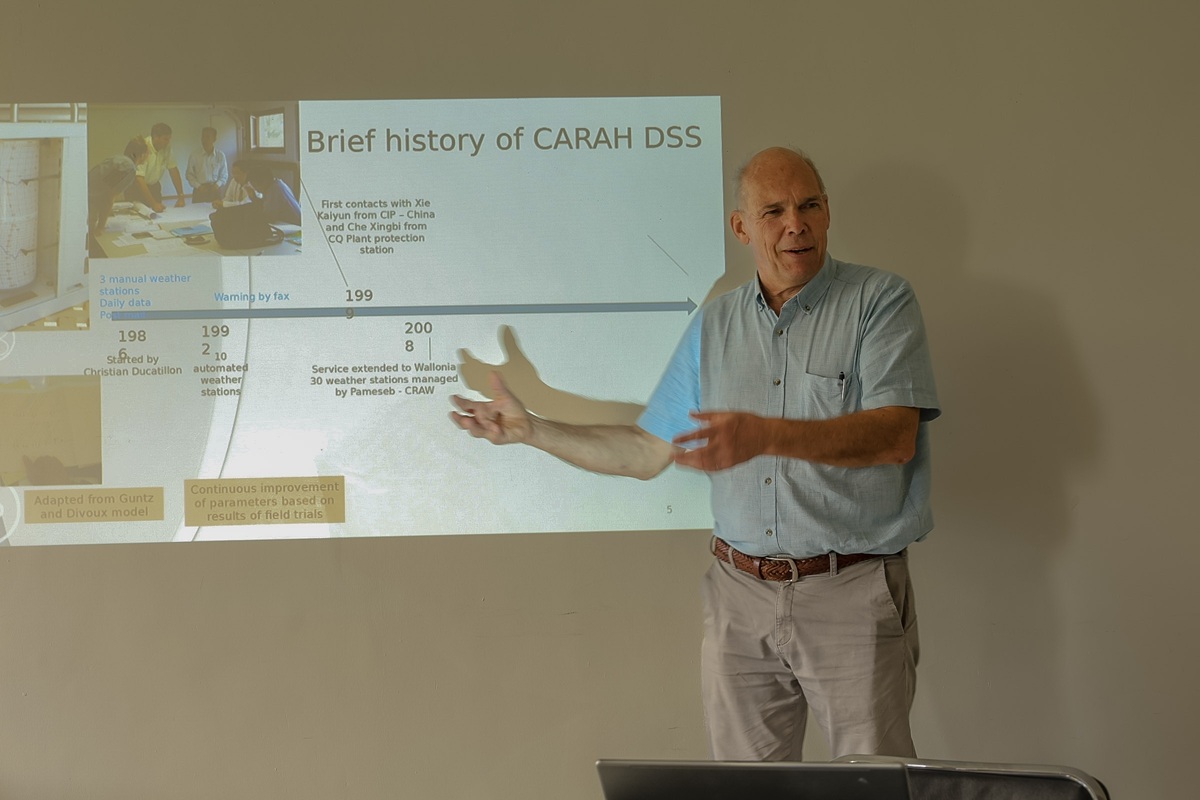
Professor François Serneels of CARAH, Belgium, shares insights on the CARAH Decision Support System and its role in advancing digital potato late blight management with TAGDev 2.0 students at Egerton University.
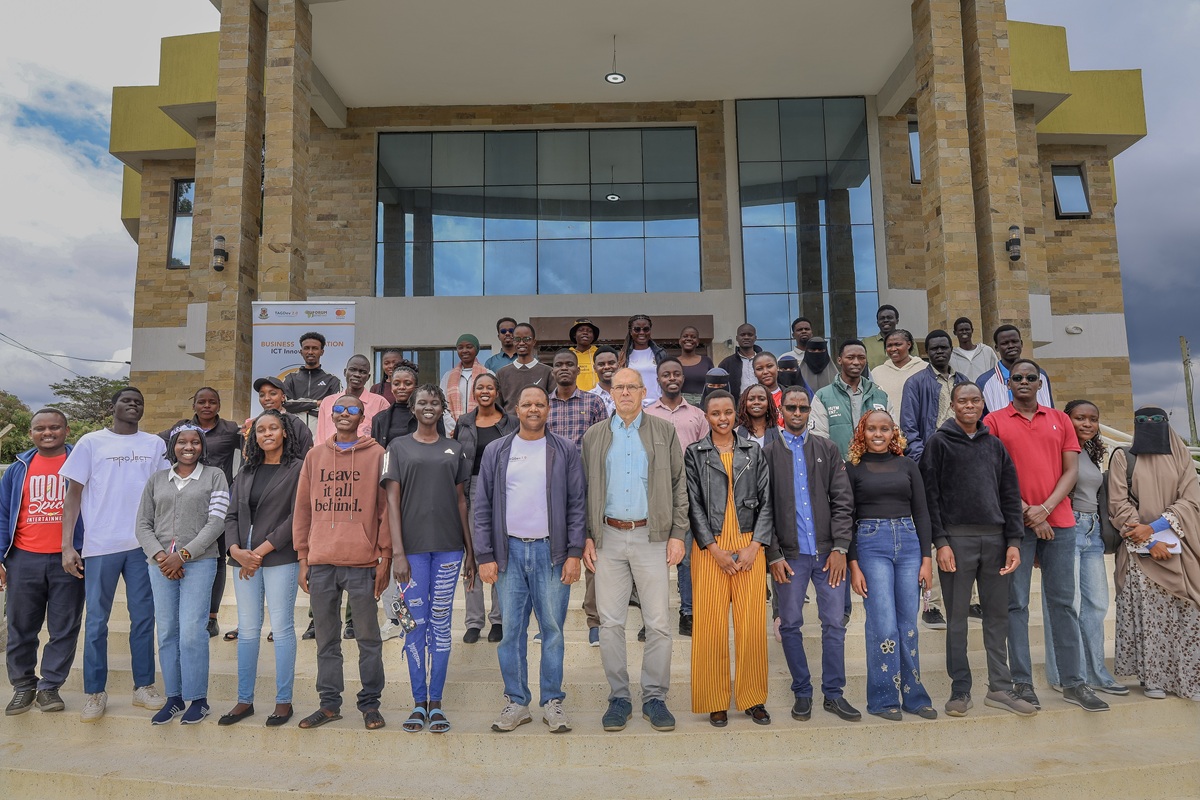
Recognizing the need to equip the next generation of agricultural professionals with innovative approaches to disease management, the TAGDev 2.0 Agrifood Systems and Entrepreneurship Consortium (ASEC) Seed Potato Value Chain team conducted a training for Egerton University students and staff on 31 October 2026 at the TAGDev 2.0 Centre. The training, themed “The Control of Potato Late Blight through the VigiMap Early Warning Systems,” focused on the application of digital technologies in predicting the late blight (LB) disease outbreaks and supporting timely crop protection decisions.
Late blight remains a major constraint to potato production because of its ability to spread quickly when temperature (8 to 17 0C), humidity (>90%) favor disease development. Beyond reducing yields, the disease poses a threat to potato quality and productivity when not timely managed. Effective management therefore requires more than responding to visible symptoms; it calls for reliable (prior) information on ambient temperature and relative humidity and crop cycle of the disease, to enables development of developing predictive mathematical functions that inform farmers on disease incidence, risks and thus, take preventive action.
It was explained by Bio-Engineer Francoise from Belgium that the VigiMap digital decision-support system (DSS) technology uses daily temperature and relative humidity data (derived from a weather station) to assess and predict the likelihood and severity of late blight development. Among the tools demonstrated were the CARAH epidemiological model and the VigiMap predictive platform (developed in Belgium), which support disease forecasting.
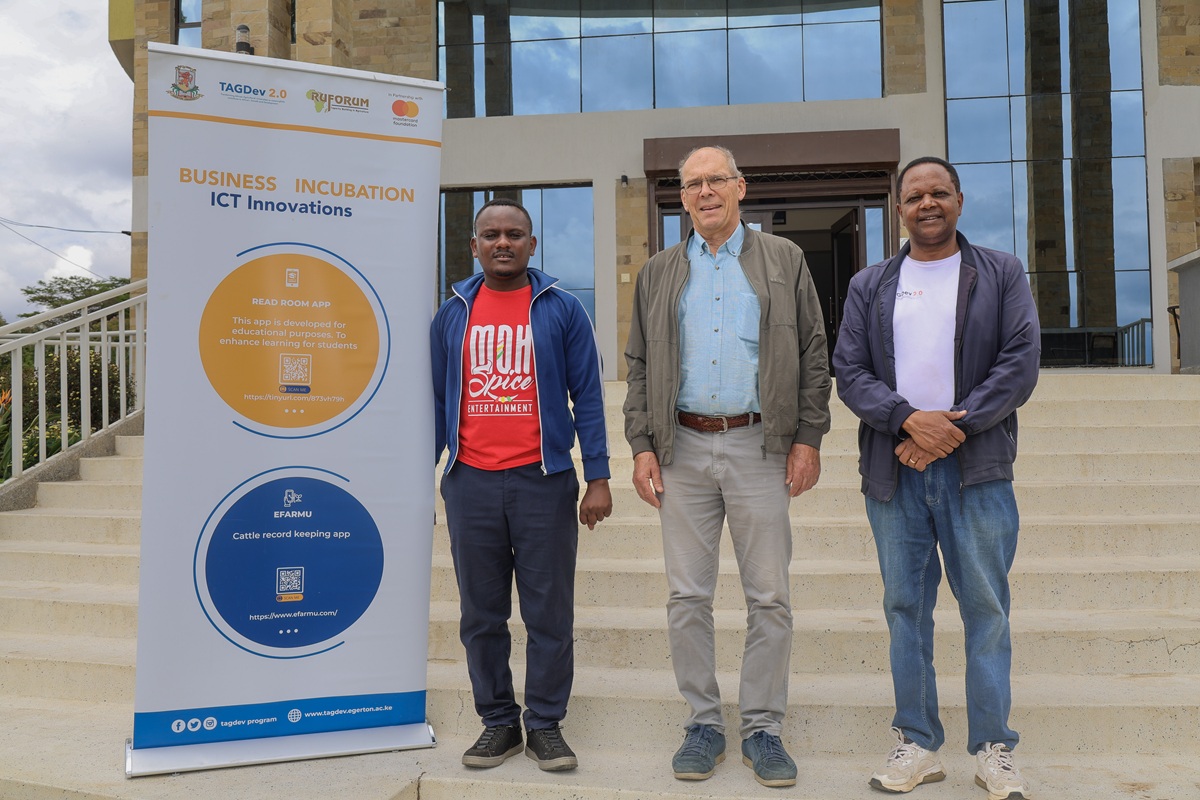
Professor Kibe, TAGDev 2.0 ASEC Seed Potato Project Lead, Research Assistant Alex Kilonzo, and Professor François Serneels of CARAH, Belgium, during a knowledge exchange at TAGDev 2.0 Centre.
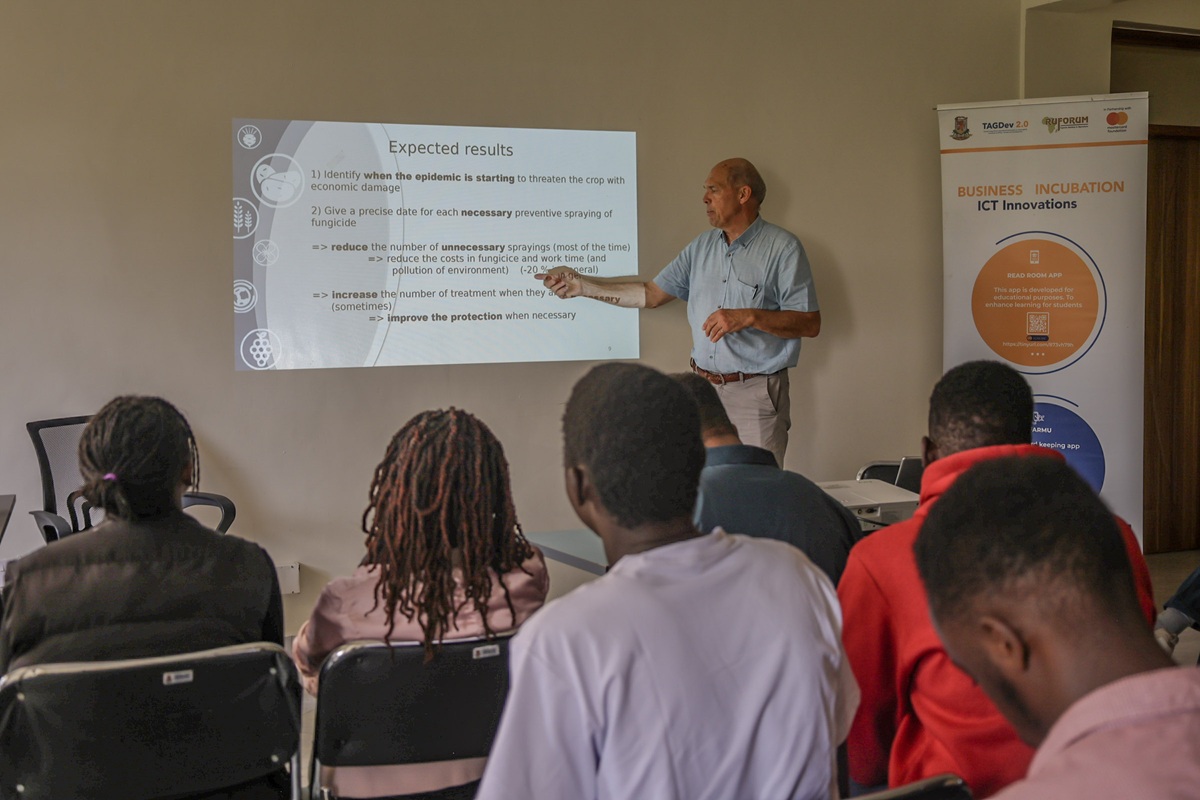
Through demonstrations and guided practical sessions, participants explored how the tools generate disease-risk information and how such information can inform disease development and when intervention may be necessary. They learned how the early warning systems can help farmers prevent the devastating effects of late blight.
A key focus was the shift from routine, calendar-based pesticide application to more targeted, risk-informed crop protection. By using disease forecasts to guide spraying decisions, farmers can avoid unnecessary pesticide applications, reduce production costs and minimise potential environmental risks while protecting their crops. This approach also promotes more responsible pesticide use and strengthens integrated crop disease management.
The practical nature of the training enabled students to move beyond theoretical understanding and engage directly with the technology. Mr. Francoise a former technical technologist from the University of Brussels in Belgium welcomed Egerton to participate in the Africa-Blight initiative launched during the World Potato Congress (WPC) held in Naivasha from 26th to 28th and 29th October 2026 in Mau Narok, Nakuru, Kenya.
The training is part of TAGDev 2.0's broader commitment to transforming agricultural universities into centres of innovation, experiential learning and community engagement.
The ASEC, is being implemented by a consortium of 6 higher learning institutions led by Egerton University, the program is strengthening the capacity of young women and men to respond to emerging challenges in agrifood systems through relevant skills, research and entrepreneurship.
Importantly, the knowledge gained is expected to catalyse participation of Egerton University and Africans, in the AfricaBlight initiative which will be spearheaded by CIP, and borrows experiences from the already existing EuroBlight and AsiaBlight multi-stakeholder platforms. Strengthening the capacity of students and staff in the use early warning systems will endear more resilient potato production systems. By turning weather data into actionable agricultural intelligence, these emerging professionals will effectively help farmers manage potato blight and create a more sustainable and food-secure potato value chain.