• +254 794 062325
  • This email address is being protected from spambots. You need JavaScript enabled to view it.
African University Leaders Convene in Botswana to Advance Transformative Leadership Under RUFORUM and Mastercard Foundation Partnership

Gaborone, Botswana, University leaders from over 60 RUFORUM member universities are gathering for a high-level Transformative Leadership Development Session for Mid and Senior University Managers, which is ongoing from 25th- 26th November 2025 during the 21st RUFORUM Pre- Annual General Meeting at Botswana University of Agriculture and Natural Resources. The two-day session, aims to strengthen leadership capacity across the RUFORUM network as institutions reposition themselves to drive Africa’s development agenda.

Image 1 Image 1 Image 2 Image 3

University leaders from over 60 RUFORUM member universities during high-level Transformative Leadership Development Session for Mid and Senior University Managers

The session brings together principals, deans, TAGDev coordinators, and ASEC partners from universities across the continent. Among the delegates is Egerton University, represented by Prof. Nancy Mungai, the TAGDev Program Coordinator, alongside institutional ASEC consortium leads; Dr Rebecca Yegon from Embu university, Dr. Grace Kamotho from Karatina University, Dr. Grace Kidere from Pwani University, Ms Pamela Nasimiyu from Baraka Agricultural College, Mr. Wallace Kairu from Nyandarua National Polytechnic & Mr. Kipkorir Bett from Dairy Training Institute . Their participation reinforces the university’s strategic commitment to transformative leadership, inclusive education, and innovation-driven development.

Image 1 Image 1 Image 2

University leaders from over 60 RUFORUM member universities during high-level Transformative Leadership Development Session for Mid and Senior University Managers

The session was opened with  emphasis on  effective partnerships,  and their  essential role  in advancing RUFORUM’s goals, highlighting the Mastercard Foundation as a key strategic partner. The ongoing leadership workshop reminds delegates that African universities must move beyond simply being together to truly working together if they are to harness the potential of the continent’s youthful population and secure their future in a rapidly changing world.

In his remarks, Mr. George Osure, the Mastercard Foundation representative,expressed confidence that participants would gain clarity on the distinction between leadership and management, reaffirming the Foundation’s commitment to deeper collaboration with RUFORUM. He noted that, “leadership requires empathy, agility, and the ability to inspire transformation at institutional and regional levels.” He envisioned an Africa where innovative products and services lower barriers for youth to enter business, particularly as formal job opportunities continue to shrink and commended RUFORUM for nurturing leaders within universities who are capable of steering the continent toward inclusive growth.
RUFORUM Executive Secretary Prof. Patrick Okori challenged delegates to reflect on self-awareness and institutional responsibility, reminding them that while managers ensure efficiency, leaders do the right thing. He also emphasized  the need for leaders who think big picture, shape institutional culture, understand their environment, clarify mission, and invest in high-quality human capital. “Universities should adopt innovative approaches, question existing performance metrics, and work collectively to write a script that history will judge kindly.” he requested.

Image 1 Image 1 Image 2

Prof. Anthony Egeru the Manager Skilling, Engagement for Community Development at RUFORUM  emphasized  that Africa must be seen as a shared destination, requiring strong accountability and continuous innovation within programs like TAGDev. He highlighted TAGDev 2.0’s African-led design, grounded in stakeholder needs and practical solutions. The program builds on the achievements of TAGDev 1.0, including the Botswana safflower CARP initiative, which strengthened seed systems, established farmer cooperatives, cultivated 10,000 hectares, and contributed USD 443 million to the economy.

Image 1 Image 1 Image 2

This ongoing session outline’s RUFORUM’s vision to enhance leadership capacity through strategic planning, change management, governance, innovation, and collaborative action. Delivered through interactive methods, expert-led sessions, and ecosystem-wide engagement, the workshop equips leaders with tools to build universities that are inclusive, resilient, entrepreneurial, and aligned with Africa’s economic and social transformation priorities.

As TAGDev 2.0 accelerates implementation through Agrifood System and Entrepreneurship Consortia, student enterprise schemes, and value chain-centered approaches, the leadership session serves as a critical platform for shaping institutions capable of empowering young Africans and driving sustainable agrifood system transformation.

Written By:
Ian Kamau.
Communication Intern, TAGDev 2.0 Program, Egerton University. 

Image 1 Image 1 Image 2

Building Stronger Cooperatives for Farmers and Youth Livelihood Development: TAGDev 2.0 Launches a strategic Collaboration with Cooperatives in Nakuru County

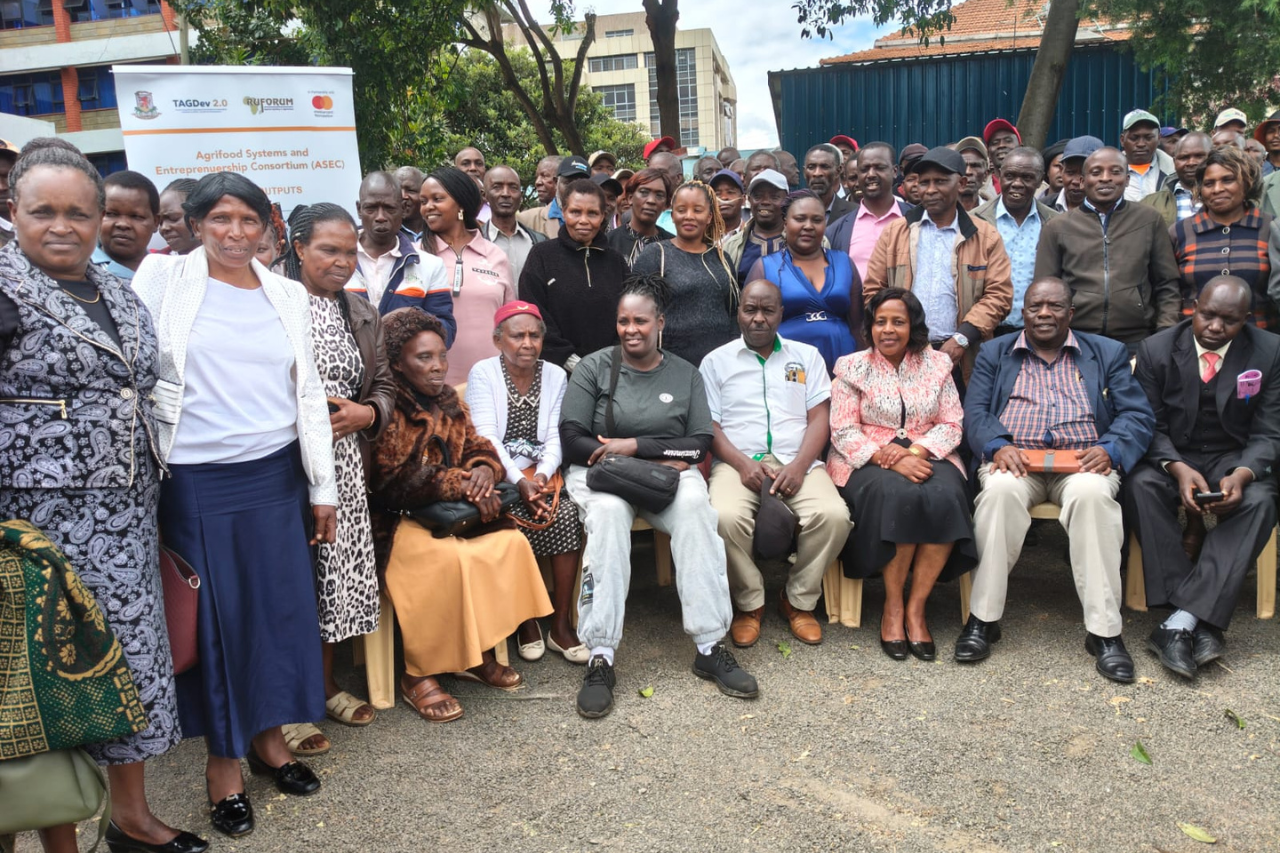
On 18th November 2025, the TAGDev 2.0 Program, Egerton University held a strategic engagement meeting with 144 farmers from Nakuru County cooperatives at the Catholic Diocese of Nakuru conference hall. The session brought together Sub-County Agricultural Officers (SCAOs), cooperative leaders, and members for a collaborative discussion aimed at establishing capacity-building needs, strengthening cooperative structures, enhancing productivity, and promoting climate-smart agricultural practices. The meeting served as a platform to deepen understanding of cooperative operations across Nakuru County while laying the foundation for long-term partnership through which the program and cooperatives can jointly advance inclusive, youth-centered, and innovation-driven agricultural development.

In her opening remarks, TAGDev 2.0 Program Coordinator Prof. Nancy Mungai thanked the farmers for honoring the invitation and making time for the engagement. She reaffirmed Egerton University’s commitment under the Transforming African Universities to Meaningfully Contribute to Africa’s Development (TAGDev) program of working closely with farmers and their cooperatives as key partners in driving agricultural transformation. She reported that TAGDev 2.0 is committed to strengthening cooperatives and empowering young women, young men, and farmers to adopt climate-smart technologies. She highlighted that the program intends to walk closely with cooperatives, particularly those engaged in root and tuber crops and the dairy value chain, in understanding their structures, knowing the farmers they serve, and exploring ways of reinforcing their capacities to deliver better services. She underscored that this was only the beginning of a long collaborative journey grounded in unity, shared commitment, and the belief that strengthened cooperatives can accelerate agricultural transformation.

The farmer cooperatives were taken through the overview and deliverables of the TAGDev program by Virginia Njuguna, TAGDev 2.0 Associate Program Officer and gained a deeper understanding of how it seeks to empower smallholder farmers, expand opportunities for young women and men, and strengthen cooperatives in ways that promote resilience, productivity, and economic inclusion. The discussion further explored how enhanced collaboration with cooperatives can unlock new opportunities for learning, innovation, and value addition across the agricultural landscape.

The SCAOs from Njoro-Mr. Simon Kariuki, Molo-Mr.Julius Mwangi, Kuresoi South-Ms. Joan Koskei, Rongai-Ms. Judith Achieng, and Subukia-Ms Miriam Kinyanjui provided a joint overview of the cooperative ecosystem across their sub-counties. Their presentations highlighted the diversity of cooperatives, the emerging opportunities in various value chains, and the structural challenges that continue to limit cooperatives’ productivity and market competitiveness. They reported gaps such as limited access to certified seeds, inadequate extension services dissemination to farmers, infrastructural constraints affecting market access, and low participation of youth in cooperative leadership and activities. The officers emphasized that while cooperatives hold significant potential for growth, they require strengthened governance, improved management, greater transparency, and more effective engagement of young people to tap into new technologies and evolving market opportunities.

The entrepreneurship session invited cooperatives to reflect on the importance of enterprise-oriented approaches that can enhance job creation, stimulate value addition, and improve overall cooperative performance. Participants examined lessons from thriving cooperative models and discussed how visionary leadership, integrity, and market-driven thinking can position cooperatives as catalysts of rural development.

A comprehensive needs assessment exercise revealed several critical capacity gaps that must be addressed to strengthen cooperative functionality. These included the need for improved financial literacy and record keeping, enhanced leadership and governance skills, stronger business planning and entrepreneurship competencies, and greater exposure to modern farming methods and climate-smart agriculture. These training needs will inform the program’s future interventions in order to build stronger, more resilient cooperatives capable of serving farmers effectively.

In conclusion, the engagement reaffirmed the collective commitment of Egerton University, the County Government of Nakuru, and farmer leaders to strengthen farmer cooperatives as a key driver of agricultural transformation in the county. Through sustained collaboration, capacity building, and the promotion of climate-smart innovations, TAGDev 2.0 aims to expand meaningful employment for young people, enhance economic resilience, and support inclusive and sustainable growth within the region’s agri-food systems. The meeting marked the beginning of a deeper partnership that will continue to evolve in alignment with the cooperatives’ priority value chains and shared development aspirations.


 TAGDev 2.0 National Coordinating Committee Charts Strategic Path for TAGDev 2.0 Implementation in Kenya

Egerton University and University of Eldoret are among the 15 African Universities implementing Transforming African Agricultural Universities to Meaningfully Contribute to Africa’s Growth and Development (TAGDev 2.0) program for the period between 2023-2033. This transformative initiative is designed to equip and empower Africa’s young women and men and their institutions to foster inclusive, equitable, and resilient socio-economic development within their communities. The TAGDev 2.0 National Coordinating Committee comprising of members drawn from universities, TVETs, Government and private sector, was constituted to support implementation of TAGDev 2.0 program in Kenya.

The 2nd NCC meeting was held on 13th and 14th November 2025 at Masada Hotel, Naivasha to strategize on strengthening delivery of the program at Egerton University and the University of Eldoret. The meeting was officially opened by Prof. Bernard Aduda, Deputy Vice Chancellor in charge Academics, Research and Extension, on behalf of the Vice Chancellor, Egerton University. This first physical meeting was aimed at providing members with an opportunity to interact with each other, gain a clear understanding of the program’s goal, review their specific roles and deliverables, and develop a plan of activities.

During the opening remarks, Prof. Benard Aduda reaffirmed the university commitment to supporting implementation of TAGDev 2.0 through timely and responsible execution of its roles. The Chair of NCC, Ms. Jacinta Ngwiri from the Ministry of Agriculture, Livestock and Fisheries (MOALF) appreciated the TAGDev 2.0 leadership and consideration to constitute the committee noting that membership was well thought through and that utilizing the wealth of experiences that each member brings onboard,  committee is committed to providing strategic oversight and coordination, ensuring that program interventions remain aligned with national priorities and institutional objectives while fostering collaboration and synergy among partner institutions, and promoting knowledge sharing, documenting best practices, and advocating for policy changes. This led to adoption of a “Delivering Together” model, emphasizing the importance of inclusive participation and shared responsibility in achieving TAGDev 2.0’s deliverables. The NCC agreed to be guided by the program’s long-term impact ambitions, particularly: Supporting achievement of individual and institutional deliverables; Contributing to sustainable, long-term solutions for youth employment in the agri-food system; Strengthening policy contributions at institutional, county, and national levels; Enhancing synergy across programs implemented by member institutions. The NCC reaffirmed its role as a platform for sharing lessons, ensuring accountability, and generating actionable recommendations to address emerging challenges.

The program Coordinators, Egerton University (Prof. Nancy W. Mungai) and University of Eldoret (Prof. Julius Ochuodho) took members through an in-depth understanding of the transformative agenda that each institution is focusing on in delivery of TAGDev 2.0. The two universities are collaborating with 6 other universities and 9 TVET institutions in Kenya in delivery of the Agri-food Systems and Entrepreneurship Consortium projects in Kenya. The ASEC projects aim at expanding work opportunity in Kenya to at least 46,250 young women and men, skill 9,175 out of school youth, Validate and scale at least 15 Climate smart technologies, innovations and management practices, reach at least 149,000 smallholder farmers, strengthen at least 11 farmer cooperatives, grow at least 1.45 million trees. The main value chains include Dairy, Roots and Tubers Value chains.

To achieve these objectives, the Ministry of Agriculture and Livestock and Fisheries represented by Ms. Jacinta Ngwiri pledged support in facilitating access to its farmer database. Universities were tasked with specifying the exact data required to enhance farmer engagement processes. Kenya Private sector Alliance (KEPSA) noted that the TAGDev 2.0 program is timely in addressing the pressing needs in Kenya and welcomed collaborations in supporting entrepreneurship and linkages to financial support for young innovators. The committee emphasized the need for structured support for youth entrepreneurs, noting that nurturing passion-driven entrepreneurship is key in reducing attrition. The committee also noted gaps in Kenya’s agricultural planning system and committed to preparing a policy brief focusing on reorganizing agricultural planning to support sustainable production. The NCC meeting reaffirmed the collective commitment of universities, government bodies, private sector actors, and development partners to ensure the successful rollout of TAGDev 2.0 at Egerton University and the University of Eldoret. The focus on collaboration, accountability, innovation, and youth empowerment positions the program to significantly contribute to a more vibrant and inclusive agri-food system in Kenya.

During the closing session, representatives from universities, government, and TVET institutions expressed appreciation for the two-day engagement and affirmed their commitment to collaboratively delivering the TAGDev 2.0 program. Dr. M. Orinda (Jaramogi Oginga Odinga University of Science and Technology) highlighted that the meeting was timely given the urgent need to transform the agrifood system. She emphasized that the program is transformative—promoting mindset change, influencing policy at institutional and national levels, enhancing inclusivity and equity, and supporting technology integration in agriculture. She noted that the program’s strength lies in its community-oriented approach and reaffirmed the commitment to “deliver together.” Ms. Elizabeth Shungula (National Treasury) appreciated the inclusive composition of the NCC and the value of the in-person meeting. She commended the chair’s leadership, encouraged universities to use the platform to address emerging issues, and affirmed the National Treasury’s commitment to fully support the program.

Ms. Jacinta Ngwiri, newly confirmed as NCC Chair, expressed gratitude for the confidence placed in her. She welcomed the openness and knowledge-sharing demonstrated during the meeting and reaffirmed that the program is well designed to deliver meaningful societal transformation. She urged members to perform their roles diligently, view failures as learning opportunities rather than shortcomings, and maintain collaborative effort. She recommended future meetings adopt similar in-depth engagement to leverage the diverse expertise within the committee. Ms. Pamela Nasimiyu (Principal, Baraka Agricultural College) thanked universities for including TVETs in the forum and noted that TAGDev comes at a critical time for addressing societal challenges. She emphasized keeping the end user in mind, advancing wealth creation, and strengthening collaboration across institutions. She highlighted the TVET sector’s role in youth skilling, dual training, and field attachments, while acknowledging challenges such as limited equipment for experiential learning. She encouraged resource mobilization, joint research, technology development, and exchange programs to enhance infrastructure and training quality. The workshop was officially closed with a shared commitment to support implementation of TAGDev 2.0 and to build on the insights generated during the meeting


TAGDev 2.0 National Coordinating Committee Meeting – Naivasha

The TAGDev 2.0 National Coordinating Committee, comprising members drawn from universities, TVETs, the government, and the private sector, including KEPSA, is meeting in Naivasha on the 13th and 14th of November 2025. The committee is mandated to provide strategic oversight and coordination, ensure that program interventions remain aligned with national priorities and institutional objectives while fostering collaboration and synergy among partner institutions, and promote knowledge sharing, documenting best practices, and advocating for policy changes. The meeting provides an opportunity for members to interact with each other, gain a clear understanding of the program’s goal, review their specific roles and deliverables, and develop a plan of activities. DVC Research and Extension, representing the Vice Chancellor, Egerton University officially opened the convening.